

Fallopian Tube Blockage: Natural Pregnancy Still Possible? Know the Success Rates and Risks
“We've been trying for a baby for over half a year with no success—could my fallopian tubes be blocked?”“If the tubes are blocked, does that mean I can't get pregnant naturally?”Questions like these are extremely common in gynecology clinics. Statistics show that tubal factors account for 25%–35% of female infertility.
The fallopian tubes are not only the “passageway” where sperm and egg meet, but also the temporary residence for early embryo development. In addition, their inner wall cilia help transport the fertilized egg into the uterus.
So, can a woman still conceive naturally if her fallopian tubes are blocked? What about the success rates and risks of common diagnostic and treatment methods such as HSG (hysterosalpingography), hydrotubation, and surgical interventions?
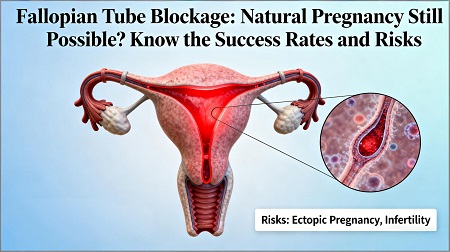
What Exactly Is Fallopian Tube Blockage?
Fallopian tube blockage can take several forms. The location and severity of the obstruction determine how likely pregnancy is. Here's a breakdown to help identify which situation you may fall into:
One-Sided Tubal Blockage: Natural Pregnancy Is Still Possible—No Need to Panic
Women have two fallopian tubes, one on each side.
If only one tube is blocked and the other remains open, the monthly chances of ovulation aren't affected—the “two-lane highway” simply becomes a “single lane.” As long as the ovary on the open side ovulates normally, sperm and egg can still meet. Clinical data show that the natural conception rate is about 10%–15% per cycle for this group.
For example, a 28-year-old patient at our clinic had left-sided blockage due to pelvic inflammatory disease, while the right tube was open. After monitoring ovulation and timing intercourse accurately, she conceived naturally in the third month.
Women in this category should focus on ovulation monitoring and aim for intercourse during the cycle when the ovary of the fallopian tube releases an egg.
Complete Blockage of Both Tubes: Natural Pregnancy Is Generally Not Possible—Seek Treatment Promptly
If both fallopian tubes are completely blocked, such as after ectopic pregnancy surgery that removed part of a tube or due to chronic inflammation causing adhesions, sperm and egg cannot meet. In such cases, the chance of natural conception is virtually zero.
Don't wait for a “miracle,” and avoid unproven remedies. Go to a qualified hospital for evaluation and decide—based on the blockage site—whether surgery to reopen the tubes or IVF is more appropriate. The sooner you make a treatment plan, the better.
Tubes That Are “Open but Not Smooth”: The Most Dangerous Middle Ground—Don't Try to Conceive Blindly
“Open but not smooth” means the tube isn't fully blocked but has narrowed sections or damaged cilia. Sperm may still pass through, but the fertilized egg can get stuck in the tube, greatly increasing the risk of ectopic pregnancy.
Studies show that women with this condition have a 5–8 times higher risk of ectopic pregnancy. A 30-year-old patient once ignored her “partial blockage,” tried to conceive on her own, and ended up with a ruptured ectopic pregnancy that caused severe internal bleeding—a near-critical situation. Therefore, make sure the tubes are treated and functioning well before trying to conceive.
Choose the Right Test First: HSG or Hydrotubation?
When fallopian tube problems are suspected, the first step is proper testing. The two most commonly used methods are hysterosalpingography (HSG) and tubal hydrotubation, but many women don't understand their differences. This often leads to unnecessary expenses or delays in diagnosis.
Hysterosalpingography (HSG): High Accuracy, the Preferred Test
HSG involves injecting a contrast agent into the uterus and fallopian tubes and observing its flow through X-ray or ultrasound imaging to precisely assess the location and severity of any blockage.
Advantages:
Accuracy exceeds 90%.
Clearly shows blockage location, tube shape, and adhesions.
Provides reliable guidance for treatment.
Modern ultrasound-based HSG avoids X-ray exposure, making it safer for women trying to conceive. Pregnancy attempts can resume as early as the next cycle.
Disadvantages:
Mild discomfort similar to menstrual cramps;
Costs 800–1500 RMB, higher than hydrotubation.
Best for:
Women trying to conceive for over a year, or those with a history of pelvic inflammation or miscarriage. This is the first-choice diagnostic method.
Tubal Hydrotubation: Based on “Feel,” Less Reliable
Hydrotubation involves injecting saline into the uterus while the doctor judges tubal patency based on resistance and backflow. It lacks imaging support and relies heavily on operator experience.
Advantages:
Lower cost (300–500 RMB).
Simple procedure.
Mild adhesions may be opened by fluid pressure.
Disadvantages:
The accuracy is only around 50%.
Higher chance of false-positive or false-negative results.
For completely blocked tubes, forceful injection may risk tubal rupture.
Best for:
Not recommended as the primary test.
More suitable for post-treatment follow-up or for preliminary screening when finances are limited.
Note: If fallopian tube blockage is suspected, ultrasound-based HSG should be your first choice. Avoid choosing hydrotubation solely because it's cheaper. Testing is best done 3–7 days after menstrual bleeding stops, and avoid intercourse before the procedure.
How to Choose a Treatment? It Depends on the Severity of the Blockage
Once a problem is detected, the treatment plan should be selected based on how severe the tubal blockage is. Here's a breakdown:
Mild Inflammatory Adhesions: Medication and Physiotherapy
If imaging shows only mild adhesions in the fallopian tubes without significant blockage—often caused by chronic pelvic inflammation—surgery is not necessary. Medication combined with physiotherapy is usually sufficient.
Treatment primarily involves oral or intravenous antibiotics to control the inflammation, often combined with traditional Chinese medicine (TCM) formulas like Fuyan Pill. It can help clear heat and toxins, improve blood circulation, and promote healing of the fallopian tube lining.
In addition, adjunctive TCM therapies such as herbal enemas or pelvic physiotherapy (e.g., microwave treatment) can accelerate inflammation resolution. A typical course lasts 1–2 cycles, with each cycle around 14 days.
Pregnancy outcomes:
Women in this category can achieve pregnancy rates of 20%–30%. For example, a 26-year-old patient developed mild tubal narrowing due to pelvic inflammation triggered by intercourse during menstruation. After one treatment cycle, her tubes were confirmed open, and she conceived naturally the following month.
Note: During treatment, avoid intercourse, maintain good personal hygiene, and refrain from spicy or irritating foods, as these can affect recovery.
Fimbrial Adhesions or Segmental Blockage: Laparoscopic Surgery for Minimally Invasive Tubal Reopening
When the blockage is located at the fimbrial end (where the egg is captured) or a specific segment of the fallopian tube, laparoscopic surgery is the preferred treatment. This minimally invasive procedure requires only 2–3 small abdominal incisions to separate adhesions and reopen the tube, causing minimal damage and allowing rapid recovery.
Success rate: About 35%–50%, depending on the degree of tubal damage. Women with well-functioning, non-deformed tubes tend to have higher post-surgery pregnancy rates. However, if the tubes are severely fibrotic, the likelihood of successful reopening decreases.
Risks: Include anesthesia complications, post-operative infection, and recurrence of adhesions. These risks can be effectively managed in a reputable hospital.
Postoperative window: Women under 35 have the highest chance of conceiving within 6 months after surgery. If pregnancy does not occur within a year, natural conception rates drop significantly, and assisted reproductive techniques are recommended.
Severe Blockage or Post-Surgery Infertility: IVF as the Most Effective “Fallback” Option
For complete tubal blockage, poor surgical outcomes, or women over 35 years old (when ovarian function declines faster), in vitro fertilization (IVF) is the most reliable solution. IVF bypasses the fallopian tubes entirely: embryos are fertilized and cultured outside the body before being transferred directly into the uterus, effectively resolving tubal infertility.
Success rates:
Women under 35: 60%–70%;
Women over 35: 40%–50%.
Many worry that IVF may “harm the body,” but the medications used for ovarian stimulation are safe, egg retrieval is minimally invasive, and most women can resume normal activities within 1–2 days after the procedure.
Case example: Linda, 38, had complete bilateral tubal blockage due to endometriosis. After surgery and one year of trying unsuccessfully, she successfully conceived on her first IVF attempt. Don't resist IVF—it represents hope for many women struggling with tubal infertility.
Prevention Comes First: Adjusting Daily Habits
Most fallopian tube blockages are acquired, meaning they develop over time due to infections or other factors. Women preparing for pregnancy should avoid habits that can damage the tubes:
Don't ignore gynecological infections: Chlamydia infection accounts for up to 40% of tubal blockages. Vaginitis and cervicitis should be treated promptly to prevent upward-spreading infections that could lead to pelvic inflammatory disease.
Avoid intercourse during menstruation: During periods, the uterine lining sheds and the cervical opening is more exposed, making it easier for bacteria to enter the uterus. Many cases of pelvic inflammatory disease are triggered by intercourse during menstruation, which can damage the fallopian tubes.
Use contraception when not trying to conceive: Miscarriage increases the risk of tubal blockage 2–3 times, so women who are not actively trying to conceive should use safe and effective contraception.
Conclusion
Fallopian tube blockage is not an absolute barrier to pregnancy:
Single-sided blockage: Can still try for pregnancy with careful ovulation monitoring.
Partial blockage (“open but not smooth”): Tubes should be treated first before attempting conception.
Complete bilateral blockage: Requires timely medical intervention.
For women trying to conceive for over a year (or over six months if older than 35), a fallopian tube evaluation is recommended to make the most of the optimal fertility window. With proper assessment and care, every woman has a chance to welcome her child successfully.
How Does Hydrosalpinx Significantly Reduce IVF Success Rates? How Can TCM Improve Fertility Outcomes?
previous pageCan You Get Pregnant with One Blocked Fallopian Tube? Doctors Explain the Best Timing
next page- Can You Get Pregnant with One Blocked Fallopian Tube? Doctors Explain the Best Timing
- Fallopian Tube Blockage: Natural Pregnancy Still Possible? Know the Success Rates and Risks
- Is Fallopian Tube Blockage Causing Your Lower Abdominal Pain?
- Hydrosalpinx and IVF: What Are the Chances of Successful Embryo Implantation?
- Resistance During Fallopian Tube Examination May Indicate Mild Blockage
Testimonials
- Adenomyosis with Ureaplasma Urealyticum Cured by Fuyan Pill
- Tubal blockage with hydrosalpinx can be cured by TCM shortly
- Fuyan Pill Helps A woman with Adenomyosis Get Pregnant
- A Woman with Hydrosalpinx Is Cured with Fuyan pill
- Pelvic Inflammatory Disease Testimonials
- Irregular Vaginal Bleeding and Endometrial Thickening Cured by Fuyan Pill
- Pruritus Vulvae and Frequent Urination: Mycoplasma Infection Cured after 2 Courses