

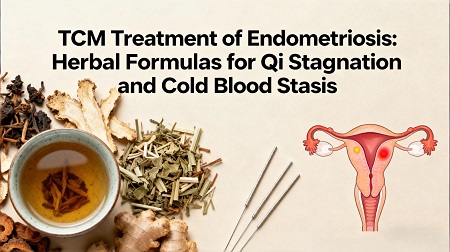
TCM Treatment of Endometriosis: Herbal Formulas for Qi Stagnation and Cold Blood Stasis
Many women are repeatedly troubled by abdominal pain during menstruation, and over time, painkillers become less and less effective. It is often only after seeking medical attention that they discover the real cause is endometriosis.
This disease is clearly defined: endometrial tissue that should normally grow inside the uterine cavity instead grows in areas outside the uterus, such as the ovaries or pelvic peritoneum, causing pain, menstrual disorders, and in severe cases, even affecting fertility.
Western medicine offers treatments such as surgery and hormonal therapy, but many women tend to prefer traditional Chinese medicine (TCM) for long-term regulation. TCM treatment is based on syndrome differentiation and can provide individualized treatment plans according to a person's constitution and symptoms, with relatively fewer side effects.
In TCM theory, the core mechanism of endometriosis is “blood stasis,” which is like a blocked river channel that obstructs the smooth flow of qi and blood, leading to pain. Among these patterns, qi stagnation with blood stasis and cold-induced blood stasis are the most common, and each requires a different therapeutic approach. Below, we will introduce the herbal formulas and conditioning methods for these two patterns.
Why Can Traditional Chinese Medicine Treat Endometriosis?
In TCM, the uterus is considered the “Sea of Blood,” and smooth circulation of qi and blood is central to normal menstruation. When endometrial tissue “escapes” outside the uterus, it acts like a foreign object that obstructs qi and blood, leading to blood stasis. In turn, blood stasis further disrupts the flow of qi and blood, creating a vicious cycle of worsening pain and stagnation, which results in menstrual irregularities.
Therefore, TCM treatment focuses on “activating blood and resolving stasis” to unblock the stagnation of qi and blood. It is essential, however, to identify the root cause of the blood stasis—whether it is due to emotional qi stagnation, cold-induced blood coagulation, or kidney deficiency impairing blood circulation. Only by tailoring treatment to the underlying cause can symptoms be alleviated at their source and the risk of recurrence reduced.
TCM offers a variety of treatment approaches, often combining oral herbal medicine, acupuncture, moxibustion, and topical applications. In herbal therapy, patent formulas such as Fuyan Pill is commonly used. This formula clears heat and detoxifies, activates blood and resolves stasis, and strengthens the spleen while draining dampness. It can help improve pelvic inflammation, pain, and menstrual irregularities, and is particularly suitable for the stable phase of the disease or for consolidation therapy.
Regardless of the method, treatment should be maintained for at least three menstrual cycles, and regulation should be gradual—there is no need to rush the process.
Qi Stagnation with Blood Stasis Type: Soothe the Liver and Activate Blood
The qi stagnation with blood stasis type is common among working women or those who are easily worried or irritable. In TCM theory, the liver governs the smooth flow of qi throughout the body. Prolonged stress or emotional repression can lead to liver qi stagnation, which obstructs qi movement and subsequently blood circulation, eventually resulting in qi stagnation with blood stasis.
Typical Symptoms: Abdominal Distension, Pain, Dark Clotted Menstrual Blood
A hallmark symptom is “distending pain that worsens when pressed”: during menstruation, the lower abdomen feels bloated and painful, and pressing the area intensifies the pain, sometimes radiating to the lower back. Menstrual blood is dark and may contain clots; pain often eases slightly after the clots are discharged.
Other common signs include chest tightness, frequent sighing, emotional fluctuations, and a dark tongue with possible purplish spots at the edges, all of which indicate stagnation of qi and blood.
Core Formula: Gexia Zhuyu Tang – Soothe the Liver and Unblock Stasis
For this pattern, Gexia Zhuyu Tang is the core formula, combining blood-activating and stasis-resolving effects with liver-soothing and qi-regulating properties. Ingredients such as Angelica sinensis, Red peony root, and Peach kernel help activate blood and remove stasis, while Cyperus rotundus and Lindera root regulate liver qi, working together to improve the circulation of qi and blood.
In TCM, formulas are adjusted based on individual patterns: for emotional depression, Bupleurum or Curcuma may be added; for severe pain, Corydalis or Trogopterus feces can be included. For those with typical symptoms who prefer convenient medication, doctors may recommend Fuyan Pill developed by Dr.Lee's clinic, whose blood-activating effects help relieve qi stagnation with blood stasis while also regulating qi and blood, making it suitable for daily maintenance or consolidation therapy. Medication should always follow a physician's guidance; self-prescribing or decocting herbs is not recommended.
Daily Care: Tea and Acupressure to Promote Qi Flow and Relieve Stasis
In daily life, drinking rose and aged tangerine peel tea can help—rose flowers soothe the liver and activate blood, while tangerine peel regulates qi and strengthens the spleen. Regular consumption may help relieve emotional tension.
Acupressure on the Taichong (LV3) point—located in the depression between the big toe and second toe on the dorsum of the foot—can also help. Gently massage the point for 3–5 minutes each night until a mild soreness or distension is felt, which may improve mood and reduce menstrual bloating and pain.
Maintaining a positive mood is also essential. Timely emotional release, outdoor walks, or gentle exercises such as yoga or Baduanjin can support the smooth flow of qi and overall well-being.
Cold-Induced Blood Stasis Type: Warming the Uterus and Dispelling Cold
Patients with cold-induced blood stasis often have a “cold constitution”: they feel chilly, have cold hands and feet, frequently consume raw or cold foods, or do not keep warm during menstruation. In TCM, “blood flows when warm, congeals when cold”—cold invading the pelvic region causes the blood to congeal, leading to stasis and pain.
Typical Symptoms: Cold Pain Relieved by Heat
A hallmark symptom is “cold pain relieved by warmth”: during menstruation, the lower abdomen feels icy and painful, but heat—such as hot compresses or warm drinks—relieves the discomfort. This distinguishes it from the qi stagnation with blood stasis type. Menstrual blood is dark with clots and often accompanied by low volume and delayed cycles.
Other common signs include loose stools, clear and long urination, a pale tongue with white greasy coating, and worsened symptoms in cold weather.
Core Formula: Shaofu Zhuyu Tang – Warm the Uterus, Activate Blood, and Dispel Cold
For this pattern, Shaofu Zhuyu Tang is the core formula. It warms the uterus, dispels cold, activates blood, and resolves stasis. Ingredients such as Fennel and Dried Ginger provide warmth to the pelvic region, while Angelica and Ligusticum promote blood circulation and dissolve stasis, improving overall blood flow.
Physicians often modify the formula according to individual needs: for severe cold sensitivity, Aconite or Mugwort leaf may be added; for heavy clots with severe pain, Sparganium or Curcumae rhizoma can be included. If significant pelvic inflammation is present, Fuyan Pill is an ideal adjunct, as its heat-clearing and detoxifying effects help improve the pelvic environment, reduce inflammatory stimulation, and relieve pain.
Formulas must be adjusted based on syndrome differentiation; self-prescribing is not recommended.
Daily Care: Moxibustion and Dietary Therapy to Expel Internal Cold
The key to daily care is warming the body. For dietary therapy, ginger and brown sugar tea is recommended—drink one cup daily during the week before menstruation. Regularly eating warming foods such as lamb and longan is beneficial, while cold and raw foods should be avoided during menstruation.
Moxibustion on the Guanyuan (CV4) point, located four finger-widths below the navel, is effective. Begin one week before menstruation, 15–20 minutes per day, to warm the uterus, dispel cold, and reduce pain.
Additionally, keep the lower abdomen, waist, and feet warm, use a hot water bag on the lower abdomen for 15–20 minutes during menstruation, and engage in light exercise such as brisk walking or slow jogging to induce mild sweating, which helps drive out cold.
Conclusion
When treating endometriosis with TCM, it is important to remember the three key principles: consistency, syndrome differentiation, and combination therapy. During treatment, medications and therapies should be strictly followed according to the physician's guidance. At the same time, careful tracking of menstrual cycles, pain severity, and characteristics of menstrual blood is essential, as this information helps doctors adjust treatment plans.
In short, although endometriosis can be stubborn, it is treatable. TCM approaches, combined with therapies such as Fuyan Pill, can effectively relieve symptoms and improve quality of life.
Endometriosis-Related Fibroids: Surgery or Medication?
previous pageManaging Endometriosis-Related Chronic Pelvic Pain with TCM
next page- Managing Endometriosis-Related Chronic Pelvic Pain with TCM
- TCM Treatment of Endometriosis: Herbal Formulas for Qi Stagnation and Cold Blood Stasis
- Endometriosis-Related Fibroids: Surgery or Medication?
- Can Chinese Herbs Eliminate Endometriotic Lesions? — Evaluating the Role of Blood-Invigorating and Mass-Resolving Therapy in Endometriosis
- High Recurrence Rate after Surgery for Endometriosis: Long-term Drug Management and Consolidation Plan of Herbal Medicine
Testimonials
- Adenomyosis with Ureaplasma Urealyticum Cured by Fuyan Pill
- Tubal blockage with hydrosalpinx can be cured by TCM shortly
- Fuyan Pill Helps A woman with Adenomyosis Get Pregnant
- A Woman with Hydrosalpinx Is Cured with Fuyan pill
- Pelvic Inflammatory Disease Testimonials
- Irregular Vaginal Bleeding and Endometrial Thickening Cured by Fuyan Pill
- Pruritus Vulvae and Frequent Urination: Mycoplasma Infection Cured after 2 Courses